News for all
Preferential trade, critical minerals, and AI. What did Uzbekistan and India agree on?
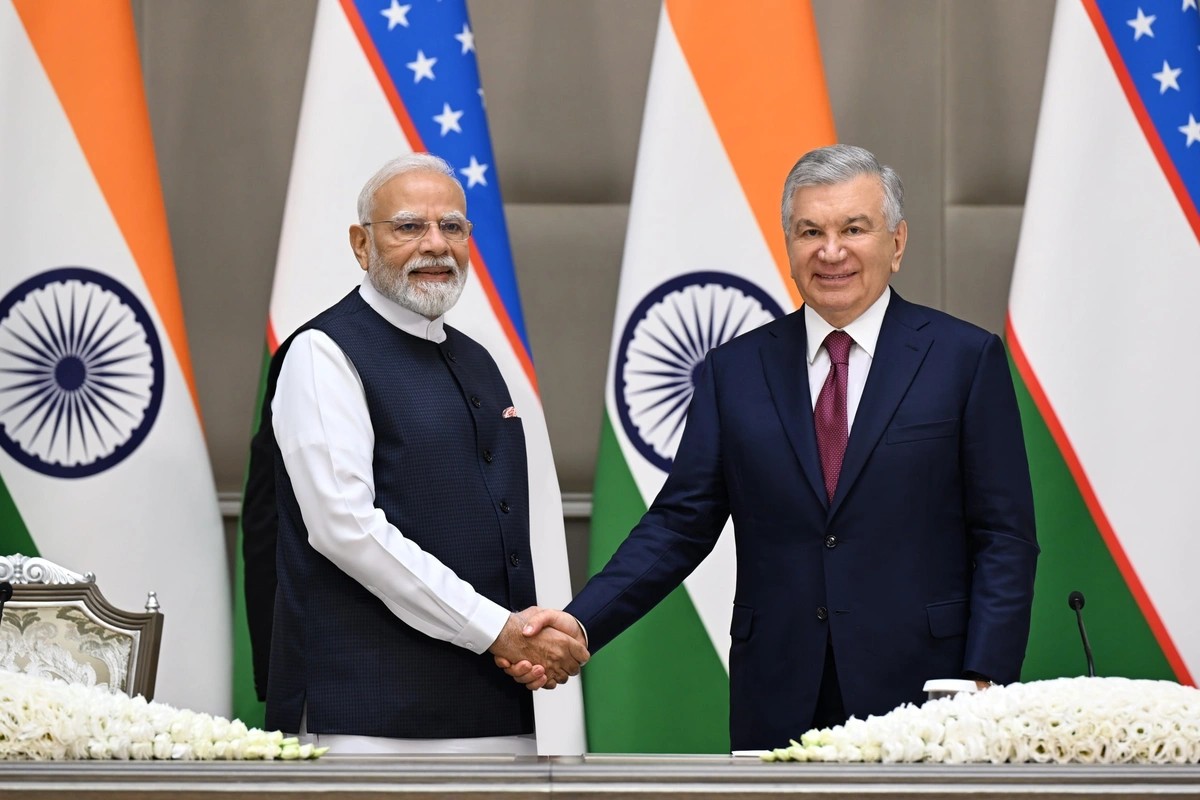
Uzbekistan and India agreed to study further steps toward concluding a preferential trade agreement and to expand cooperation in critical minerals, peaceful nuclear energy, artificial intelligence, and transport corridors. This follows from the joint statement issued following Indian Prime Minister Narendra Modi’s state visit to Uzbekistan on August 29–30.
President Shavkat Mirziyoyev and Narendra Modi held talks and agreed to deepen cooperation in trade, investment, transport connectivity, digital transformation, energy transition, critical minerals, food security, healthcare, pharmaceuticals, and education.
The sides also stated their intention to elevate relations to the level of a comprehensive strategic partnership.
Preferential trade and removal of barriers
Uzbekistan and India noted the “significant untapped potential” for expanding mutual trade and investment. During the talks, the goal was set to raise bilateral trade to $5 billion by 2030. By the end of 2025, mutual trade turnover had grown by 33% and exceeded $1.3 billion. More than 300 companies with Indian capital operate in Uzbekistan. Over the past 10 years, more than $1 billion in Indian investment has been attracted to the country’s economy.
The number of joint ventures has increased sevenfold in recent years. There are 14 direct flights per week between the countries. Four Indian universities operate in Uzbekistan.
The sides intend to expand the list of goods in mutual trade, remove non-tariff barriers, and develop industrial cooperation. To this end, they plan to establish a joint working group on non-tariff issues and investment barriers.
Separately, the sides agreed to develop e-commerce, digitize trade procedures, and introduce platforms to support small and medium-sized businesses.
India also reaffirmed its support for Uzbekistan’s accession to the World Trade Organization. The sides intend to develop dialogue between regulators and study mechanisms for mutual recognition in order to accelerate market access for goods from both countries.
One of the key points of the statement was a possible preferential trade agreement. The sides recalled the completion of a joint study on the feasibility of concluding a Preferential Trade Agreement between Uzbekistan and India. The relevant ministries have been instructed to study further steps within the established time frame.
Promising areas for increasing trade were identified as electrical engineering and machinery products, automobiles, and pharmaceuticals. Uzbekistan and India also agreed to create an institutional mechanism for addressing investor issues.
Critical minerals and nuclear energy
Uzbekistan and India agreed to study opportunities for cooperation in geology, mineral extraction, nuclear energy, industrial cooperation, and the field of critical and strategic minerals. This includes joint projects for processing mineral raw materials, producing high value-added products, and recycling secondary resources.
Indian companies are planned to be involved in the development of promising deposits in Uzbekistan. In turn, Uzbek enterprises may participate in joint projects in India.
The sides separately expressed interest in expanding cooperation in the peaceful use of nuclear energy.
For critical minerals, joint projects are envisaged at all major stages — from geological exploration and extraction to processing and the formation of integrated value chains.
Transport corridors and public transport
Uzbekistan and India will continue working on the development of multimodal transport routes and logistics corridors between the two countries.
The statement also says there is an intention to restore freight transportation in order to reduce transport costs. Which routes are meant is not specified in the document.
In addition, the sides intend to exchange experience in road construction using modern technologies and consider joint projects for the reconstruction and modernization of road infrastructure.
A separate area will be the development of environmentally friendly and energy-efficient solutions for Uzbekistan’s public transport.
Cooperation in AI, IT, and space
The leaders noted the work of Tashkent IT Park, established in 2019 on the Indian model with support from Software Technology Parks of India, and agreed to expand ties between technology parks, companies, startups, and educational institutions.
Uzbekistan and India also intend to develop the agreements reached in February at the India AI Impact Summit in New Delhi.
The sides agreed to strengthen cooperation in developing safe, secure, and trustworthy artificial intelligence systems, including through the exchange of experience and best practices.
AI is planned to be used to promote economic growth, innovative development, and the solution of social problems.
The countries also reaffirmed their interest in cooperation in the peaceful exploration of space, including the use of space technologies, the exchange of scientific data, and the conduct of joint educational programs.
India will allocate $1 million to the Aral region
India will allocate $1 million for greening and environmental restoration projects in the Aral Sea region. The projects, including technical support, will be financed under India’s grant program.
The sides also agreed to expand cooperation in healthcare and pharmaceuticals. In particular, the creation in Uzbekistan of new medical centers, laboratories, research institutions, and pharmaceutical production facilities together with Indian companies was supported.
In addition, the sides intend to cooperate in the restoration of the ancient Buddhist monuments Fayaztepa and Karatepa in Surkhandarya region, the digitization of cultural heritage sites, and the creation of 3D models of archaeological artifacts.
Source
