News
Japan will provide almost $230 million in energy efficiency loans to Uzbekistan
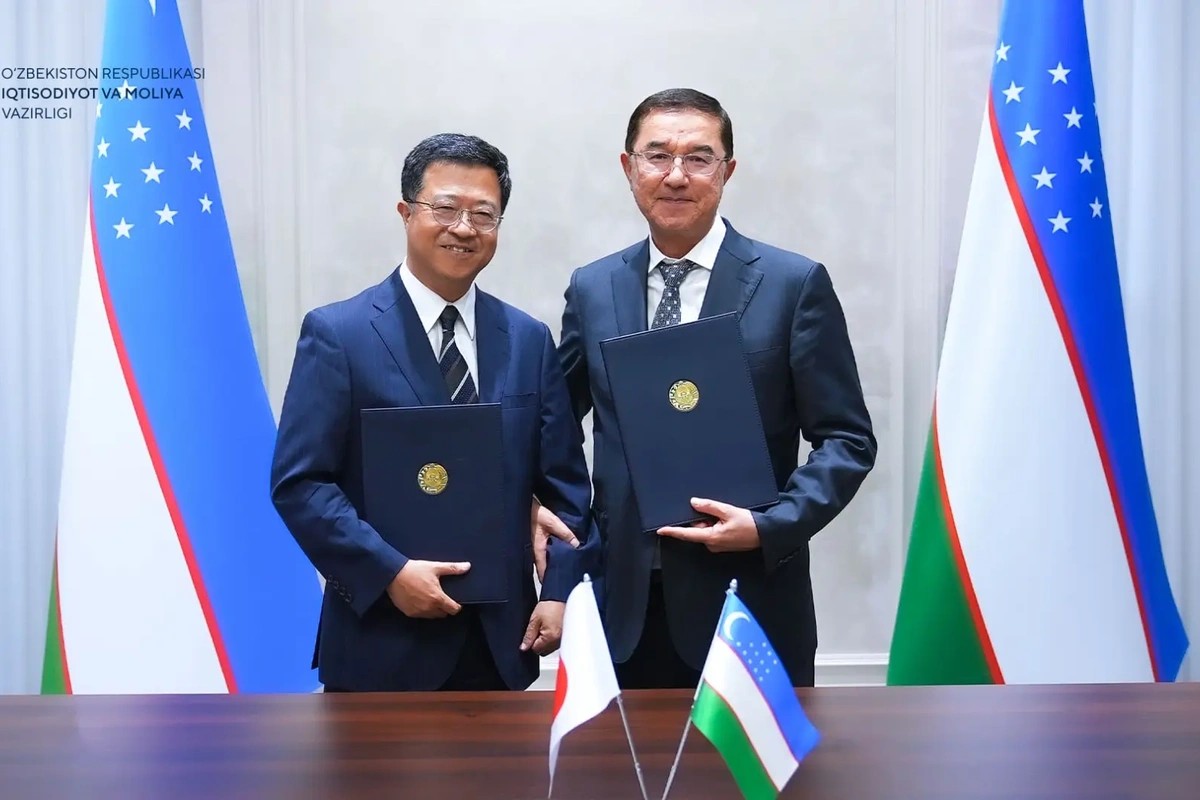
The Japanese government will provide 36.8 billion yen (about $229.4 million) in loans to Uzbekistan to improve the energy efficiency of government buildings and the industrial sector. Exchange notes for two projects were signed on June 10 in Tashkent,reportedJapanese embassy.
The documents were signed by the Japanese Ambassador to Uzbekistan Hirata Kenji and Deputy Prime Minister - Minister of Economy and Finance Jamshid Kuchkarov.
The first project, “Improving the energy efficiency of government buildings,” provides a loan of up to 21.79 billion yen ($136 million). The second is “Increasing energy efficiency in the industrial sector” - up to 14.97 billion yen ($93.4 million).
Both loans are provided for 25 years, including a 7-year grace period. The interest rate on the main part of the loan is 2.4%, on consulting services - 0.8%. Purchasing conditions - with the provision of preferences, without being tied to Japanese suppliers (untied).
According to the Japanese Embassy, Uzbekistan`s energy supply depends on fossil fuels (mainly gas), and energy consumption and greenhouse gas emissions per unit of GDP remain “extremely high” compared to global averages. In this regard, the implementation of energy saving measures is called an urgent task.
The Japanese side noted that cooperation is aimed at reducing energy consumption and greenhouse gas emissions through the modernization and introduction of energy-saving equipment and technologies in government buildings, as well as in the industrial and commercial sectors.
The Ministry of Economy and Finance reported that the project on energy efficiency in social buildings involves the introduction of energy-saving equipment and modern technologies in schools and healthcare institutions. The goal is to optimize energy consumption, increase the efficiency of resource use and the overall energy efficiency of social infrastructure facilities.
The second project is aimed at supporting investments of enterprises and business entities in energy-saving technologies. It provides for the provision of long-term, low-interest loans to finance energy efficiency initiatives in industry.
In the Ministry of Economics and Financereported, that the meeting also discussed expanding cooperation in the economic, social spheres and human capital development, the effectiveness of current projects and future joint initiatives.
In particular, the parties discussed issues of cooperation in the field of energy saving, agriculture, including livestock breeding, the “One Village - One Product” program, healthcare, personnel training and education.
The Japanese Embassy noted that the projects became the practical implementation of the “Green Development and Sustainability” direction, included in the three cooperation priorities enshrined in the Tokyo Declaration following the results of the first summit of the “Central Asia + Japan” Dialogue in December 2025.
Source
