News
Solar energy capacity has been increased in Uzbekistan
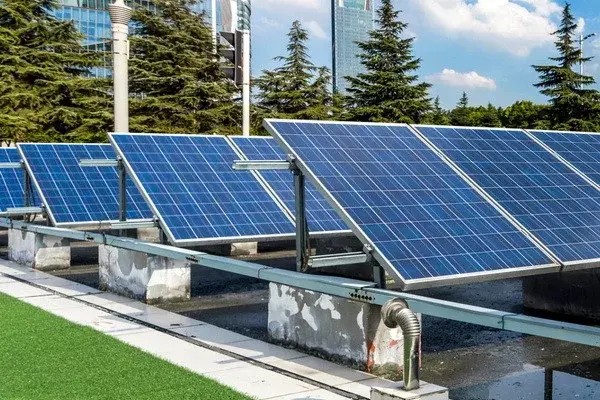
In Uzbekistan, solar panels with a total capacity of 2,508 MW were installed in 2023–2026. The electricity they generated produced 4 billion 715 million kWh, which saved 1 billion 271 million cubic meters of natural gas and prevented the emission of 2 million 711 thousand tons of greenhouse gases. This is stated in the materials of the Ministry of Energy of Uzbekistan.
The development of renewable energy in the country is accompanied by the creation of mechanisms that allow not only to increase generating capacity, but also to receive economic benefits from electricity production. In particular, Presidential Decree No. UP-220 of September 9, 2022 introduced measures to support low-power renewable energy installations in households, enterprises and social facilities.
Resolution of the Cabinet of Ministers No. 247 of June 14, 2023 provided individuals and business entities with the opportunity to sell excess electricity produced by solar, wind and biogas plants with a capacity of up to 1 MW into a unified electric power system.
One of the key mechanisms was the Solar Home program. Within its framework, citizens are paid 1,000 soums for every 1 kWh of electricity transferred to the network. This allows plant owners to generate income from excess power generation.
In 2023–2025, individuals and legal entities were paid 462.1 billion soums for electricity transferred to the network. Of this, the population received 222.9 billion soums, legal entities - 239.3 billion soums.
In January–July 2026, payments reached 632.7 billion soums. 436.7 billion soums were paid to the population, 196 billion soums to legal entities. Of the funds accrued to legal entities, 48 billion soums were used to pay off debts for electricity.
Thus, in just seven months of 2026, the volume of payments amounted to 137% of the total amount paid for the entire period 2023–2025.
By the end of 2026, the total volume of payments is expected to reach 725.6 billion soums. Of these, 506.2 billion soums will fall on the population, and 219.3 billion soums on legal entities. As a result, the total volume of payments to the population and business for 2023–2026 may amount to 1 trillion 187.7 billion soums.
The largest payments to the population under the “Solar House” program in January–July 2026 came to the Bukhara region - 81 billion soums. In Khorezm region, 79.7 billion soums were paid, in Karakalpakstan - 51.6 billion soums, in Kashkadarya region - 49.1 billion soums, in Navoi region - 34 billion soums.
At the same time, the use of solar installations in various sectors is expanding. Panels with a capacity of 478.8 MW and solar collectors with a volume of 2,821.8 thousand liters were installed at social facilities and government institutions. Households have installed solar panels with a capacity of 664.5 MW and solar collectors with a volume of 2,122 thousand liters.
Local businesses installed solar panels with a total capacity of 1,330.9 MW, and in apartment buildings their capacity reached 36.4 MW.
Capacity growth continues. From the beginning of 2026 to August 13, solar panels with a total capacity of more than 509.78 MW were put into operation in the country. By the end of the year it is planned to increase the volume of new capacities to 700 MW. This corresponds to 175% of the annual target and is 300 MW higher than the established figure.
If the stated pace is maintained, the total capacity of small solar installations in the country should reach 2,700 MW by the end of 2026.
Electricity production is also growing. By 2026, it is planned to generate 2 billion 143 million kWh of electricity from solar panels. In January–June, 1 billion 403.1 million kWh were produced, or 65.5% of the annual plan. The production of another 739.9 million kWh is planned for the second half of the year.
The Ministry of Energy notes that if current rates are maintained, the total volume of electricity produced by solar panels in 2023–2026 could reach 5 billion 37.9 million kWh.
The development of renewable energy is also used as a tool for social support. As part of investment projects based on the principles of corporate social responsibility, solar panels are installed free of charge in social institutions, households and mahallas.
To date, such installations have been put into operation in 1,411 households with a total capacity of 3,331.86 kW, 120 social facilities with a capacity of 3,157.5 kW and 21 mahallas with a capacity of 4,200 kW.
In the future, similar projects are planned to be implemented in several regions. In Karakalpakstan, it is planned to install panels with a capacity of 1,500 kW in 101 social facilities, 1,872.12 kW in 837 households and 5,200 kW in 26 mahallas.
In the Bukhara region it is planned to install 1,178.95 kW in 198 social facilities and 1,000 kW in five mahallas. In the Syrdarya region - 1,026.21 kW in 149 social facilities and 447.3 kW in 205 households.
In the Tashkent region, it is planned to install 81.54 kW in five social facilities and 99.44 kW in 44 households. In Navoi region - 500 kW in 39 social facilities, 265.02 kW in 120 households and 1,200 kW in six mahallas.
In the Samarkand region, it is planned to install panels with a capacity of 1,000 kW in 75 social facilities, 310.2 kW in 141 households and 1,600 kW in eight mahallas.
The legal framework for the development of the industry also continues to improve. In addition to Decree No. UP-220 of 2022 and Resolution No. 247 of 2023, reforms were carried out on the basis of the Law “On Electric Power Industry” No. ZRU-939 of August 7, 2024, Cabinet of Ministers Resolutions No. 13 of January 8, 2024 and No. 528 of August 24, 2024, as well as Presidential Decree No. UP-152 of August 29 2025.
The materials presented by the Ministry of Energy note that these measures are aimed at developing the electric power industry on market principles, expanding private investment and competition, as well as increasing the efficiency of the industry and protecting consumer rights.
Source
