News
The China—Central Asia mechanism is intensifying cooperation in trade, investment, green energy and the digital economy.
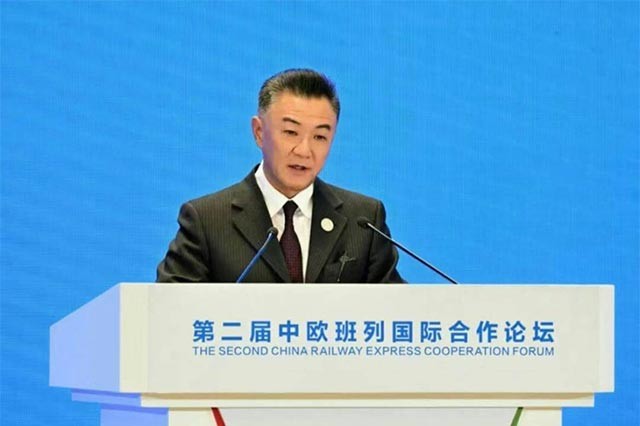
Trade and economic cooperation between China and the countries of Central Asia has reached a historic record. Sun Weidong, Secretary-General of the “China–Central Asia” mechanism, told China Daily and China News Service that in 2025 the total trade volume between China and the five Central Asian states exceeded $100 billion for the first time, reaching $106.3 billion — a 12% increase compared to 2024.
Sun Weidong noted that this result is of historical significance, especially against the backdrop of global geopolitical tensions and protectionist restrictions that undermine the international trade and economic order. According to him, China and the Central Asian countries continue to uphold free trade, deepen joint construction of the Belt and Road Initiative, and build a stable framework for economic cooperation. Since 2021, when trade amounted to $49.56 billion, it has nearly doubled, while Central Asia’s share in China’s foreign trade has increased from 0.8% to 1.5%.
China consistently ranks as the largest trading partner of Kazakhstan, Kyrgyzstan, Turkmenistan, and Uzbekistan, and in 2025 it became Tajikistan’s largest trading partner for the first time. The structure of trade is evolving: in 2025, China’s exports to Central Asia totaled $71.2 billion, up 11%, driven by strong growth in machinery and high-tech products, including industrial equipment, motorcycles, mobile phones, and lithium-ion batteries. Imports from the region reached $35.1 billion, an increase of 14%, with energy resources and minerals forming the backbone, alongside an expanding range of chemical products, metal goods, and non-commodity agricultural products.
Sun Weidong emphasized that the dynamic growth of trade is largely driven by the complementarity of the parties’ economies and resource endowments. Chinese investment plays a key role, with total investment exceeding $50 billion, while more than 40,000 Chinese enterprises are engaged in export-import operations in the region. Central Asian countries report a steady increase in the number of registered Chinese companies and a broadening of investment from energy and infrastructure into industrial manufacturing, transport, green energy, and the digital economy.
Great importance is attached to political leadership and support from the governments of China and Central Asian countries. Within the framework of the mechanism, ministerial platforms are operating, including meetings of economy and trade ministers, industry and investment forums, customs authorities’ meetings, and a business council. In Nanjing, the Trade Facilitation Platform Center was officially launched, integrating functions related to trade, industrial cooperation, and the integration of production with education.
In 2025, the second China–Central Asia Summit was held, at which the heads of state identified six priority areas of cooperation, including trade facilitation, industry and investment, connectivity, green resources, and digital transformation. The years 2025–2026 were declared the “Years of High-Quality Cooperation Development,” supported by an Action Plan for jointly advancing the Belt and Road Initiative.
The mechanism’s secretariat, which has been operating in full format for nearly nine months, is actively coordinating the work of foreign ministries and relevant agencies, ensuring the implementation of agreements reached at the second summit and laying the groundwork for the third. During this period, the secretariat participated in various ministerial platform meetings, regional cooperation forums, and international China–Europe forums, promoting the ideas and achievements of the mechanism.
Special attention is paid to humanitarian and educational exchanges. Last year, the secretariat facilitated the launch of the China–Central Asia humanitarian and tourism train, organized seminars on vocational education, conferences on the integration of industry and education, and forums on human rights. Events involving youth and students from the region were held, meetings with Central Asian delegations were organized, and cultural activities were conducted to strengthen friendship and mutual understanding.
Sun Weidong stressed that the secretariat will continue to act as a “catalyst” for the mechanism, support the implementation of agreements, promote deeper cooperation across all areas, expand trade and investment opportunities, and ensure that the outcomes of cooperation deliver tangible benefits to the peoples of China and Central Asia.
